Robust, torsion-free living cabin with exoskeleton, high-quality insulation, well thought-out design and durable construction for extreme off-road conditions.
It was below 10 °C outside and 17 °C inside, with the heat off. It rained for days, but I still slept soundly.
Cabin superstructure:
Strong, stable, insulating
A CAPETRUCK cabin is much more than just a shell - it is a shelter designed for extreme scenarios. The exoskeleton ensures maximum stability and prevents any torsion, even in demanding terrain. Precisely manufactured, folded aluminum profiles reliably seal the cabin against cold and moisture. The combination of high-quality honeycomb panels with GRP coating and extra strong outer walls guarantees a durable, resistant structure. A good feeling on every journey.
Does what it promises:
The exoskeleton
Of course, the GRP panels already provide the living area cabin with basic stability. However, the final stability of the cabin comes from the exoskeleton.
Without this skeleton, the cabin would resemble an invertebrate organism. Highly flexible but also very unstable.
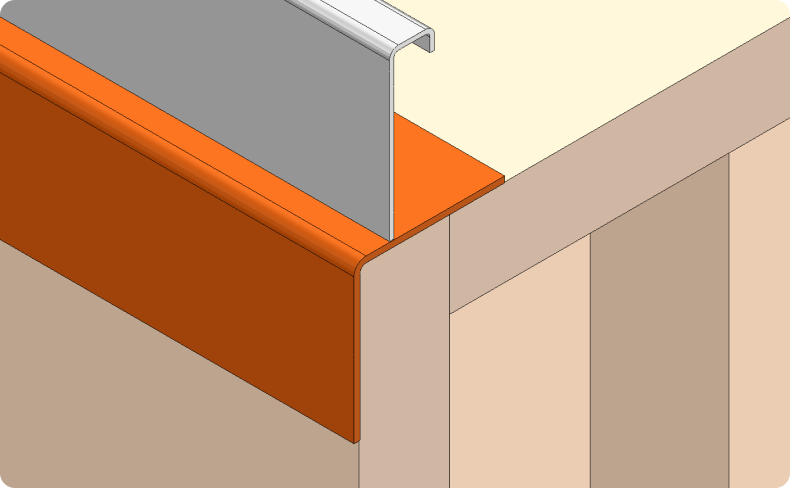
The skeleton consists of 4 mm folded aluminum profiles and 6 mm thick reinforcement plates at the transitions. Enormously stable.
The true power of this vehicle becomes especially apparent when driving off-road. An expedition vehicle based on the Iveco Daily 4×4 uses its all-wheel drive to tackle even deep ruts, bumps, and loose rock. During this process, the chassis twists significantly, and the cab must safely absorb these stresses.
Massive branch deflectors transfer tensile forces in the alcove to the rear over the entire cabin. In this way, the design prevents damage to the cabin shell in the event of extreme twisting (torsion) of the vehicle.
Adhesive joints on GRP panels are not always completely sealed after bonding. Without a protective exoskeleton, cold and moisture could penetrate at these points.
Folded aluminum profiles completely enclose the GRP edges with their bonding. Cold, moisture, dust and heat remain outside the door. This keeps the entire cabin, including windows and flaps, optimally shielded from external influences.
The cab is also separated from the driver's cab by a door. There is no exchange of air or moisture here either.
Sealed with 0.5 mm aluminum profiles
3 panels - 1 composite:
Strong insulation.
The cabin is made up of 3 types of panels:
Outer panels with 60 mm thickness and solid foam core as insulation against cold and heat.
Honeycomb panels with GRP coating on both sides as vertical support panels that carry the subfloor.
Honeycomb panels with a GRP coating on both sides combined with a solid carrier material for additional stability and strength. These panels are also used to secure other items such as furniture.
3 specific panel types
Outer panels 60 mm
Great climate and very quiet.
28 mm thick, lightweight GRP honeycomb panels form the outer walls of many motorhomes. In a CAPETRUCK, they are only used as interior walls or support panels.
A CAPETRUCK offers you stability, safety and a good indoor climate on hot and cold days. That's why the outer walls of a CAPETRUCK are made of 60 mm GRP panels. Last but not least, you can also enjoy a pleasant sense of peace and quiet: no noise penetrating the cabin from outside.
GRP honeycomb panels: 28 mm
Curious?
Request further information about the CAPETRUCK here without any obligation. I look forward to hearing from you.
The data you provide will only be processed to handle your request. More on this in our Privacy Policy.